Single-Use Data Loggers About
Provided Single-Use Data Loggers are available with configuration file and PDF measurement data. These are useful for the immediate creation of a PDF report instantly after connection to the computer. Having observance in accordance with HACCP, GxP, 21 CFR Part 11 and EN 12830, these temperature data loggers give accurate data of temperature. Proffered with operational duration of 90 days, these are ideal loggers for pharma and food cold chain logistics. Provided with simple operation, measurement frequency, clear indication of configurable alarm setups and temperature range these Single-Use Data Loggers insure proper cold chain facility that had never been so easy.
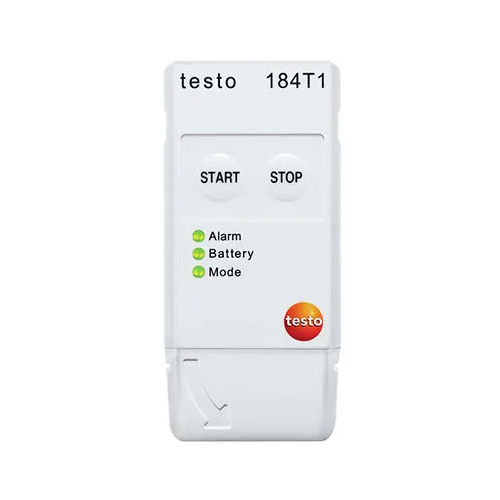
testo 184 T1 - Single-use Transport Logger
With testo 184 T1 temperature data loggers, you can monitor the transport of sensitive goods such as pharmaceuticals, foods or electronics, over a maximum period of 90 days.
testo 184 T1 is compliant with GxP, 21 CFR Part 11, HACCP and EN 12830. Testo AG is an ISO 9001:2008-certified company, and ensures the adherence to the norms through internal audits as well as accredited external audits.
- Operating time 90 days
- All in one logger: PDF measurement data, configuration file, calibration certificate and instruction manual
- Immediate PDF report creation after connection to a computer
- Compliant with GxP, 21 CFR Part 11, HACCP and EN 12830
Versatile Monitoring for Critical EnvironmentsEngineered for accuracy and convenience, these single-use data loggers excel in diverse sectors such as research laboratories, electronics, and material science. Their robust build and plug-and-play USB interface facilitate rapid deployment, while the LED display ensures straightforward data reading. The integrated battery extends their usefulness across prolonged monitoring tasks, making them a reliable solution for demanding industrial or analytical settings.
Simple Operation, Reliable ResultsInitiate logging instantly without complex setup: insert the logger, let it record, then retrieve the data using the USB connection. These white, lightweight devices are built to meet the rigorous standards required in advanced testing and monitoring, providing trustworthy results every time. Their user-focused design enhances productivity and minimizes potential errors in critical measurements.
FAQs of Single-Use Data Loggers:
Q: How do I use the single-use data logger in research or industrial settings?
A: To use the device, simply activate the logger, place it in the desired environment, and let it record data throughout the monitoring period. Upon completion, connect it via USB to a computer to download and analyze the collected data.
Q: What are the main benefits of using this data logger for material analysis or electronics?
A: These loggers offer precise, reliable data collection and feature an easy-to-read LED display. Their battery-powered operation makes them suitable for locations without constant power supply, ensuring uninterrupted monitoring for accurate results.
Q: When should I choose a single-use data logger over reusable alternatives?
A: Single-use loggers are ideal for one-time studies, transport monitoring, or conditions where data integrity following exposure is crucial. They mitigate the risk of contamination and remove the need for cleaning or recalibration after use.
Q: Where can I deploy these data loggers?
A: These devices are versatileperfect for placement in research labs, industrial workspaces, electronic manufacturing setups, and during the transport of sensitive materials where strict monitoring is crucial.
Q: What is the process for retrieving data from the logger?
A: After the monitoring period, plug the loggers USB interface into your computer. The recorded data can be easily downloaded and analyzed using compatible software, simplifying post-monitoring assessments.
Q: How does the LED display enhance usage in practical applications?
A: The LED display provides immediate visual confirmation of logger status, helping users verify operation and respond promptly to alerts or readings, enhancing reliability in critical monitoring scenarios.

 Send Inquiry




 Send Inquiry

 Send Inquiry

